AI in Logistics: Transforming Supply Chain Operations with Automation

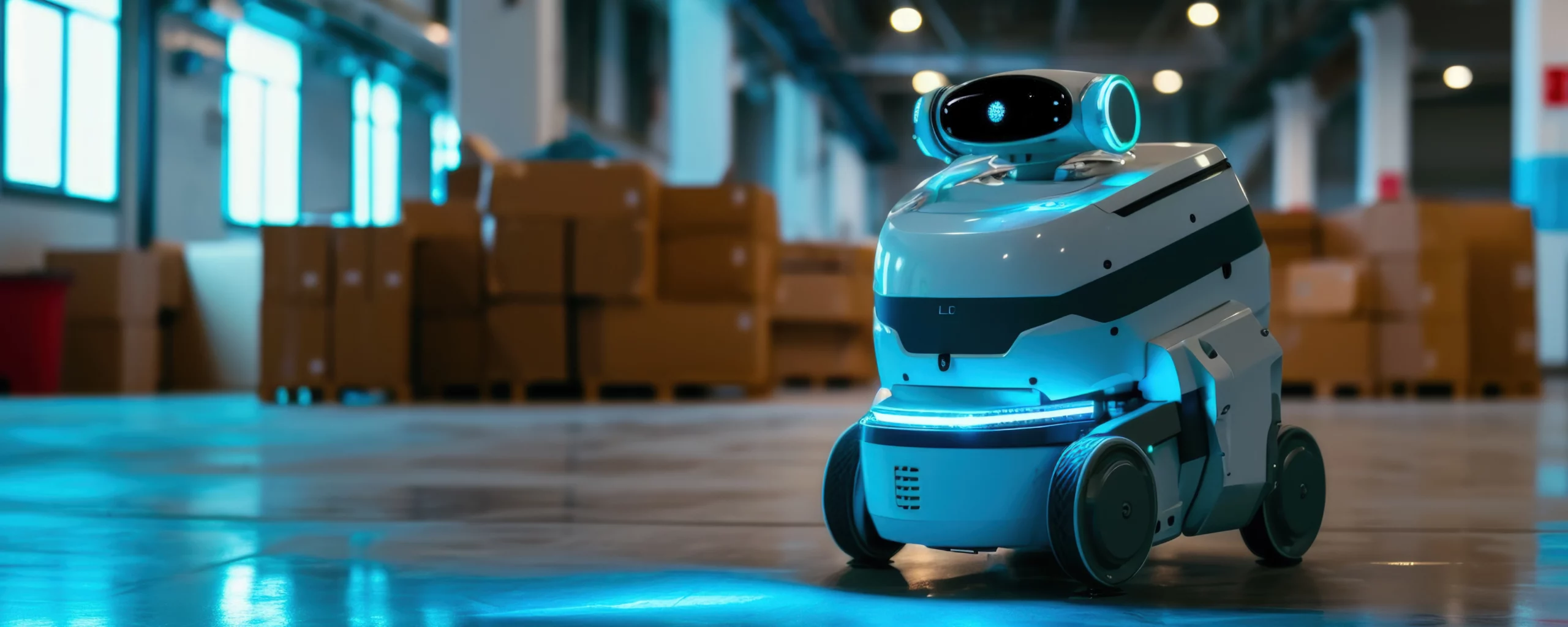
The logistics industry stands at an inflection point. Last-mile delivery alone consumes 53% of total shipping costs, while driver shortages and capacity constraints squeeze already thin margins.
Customer expectations have shifted dramatically—real-time visibility, same-day delivery, and flawless execution are no longer premium services but baseline requirements.
For logistics entrepreneurs and supply chain leaders, these converging forces create both unprecedented challenges and opportunities. AI in logistics has emerged as the strategic response that addresses all these pressures simultaneously.
The Modern Logistics Challenge
The logistics landscape has grown exponentially more complex over the past decade.
1. E-commerce growth has fragmented shipping patterns, turning predictable bulk routes into thousands of individual delivery points.
2. Labor markets have tightened, and persistent driver shortages that impact capacity planning.
3. Fuel costs fluctuate unpredictably, while regulatory requirements around emissions and safety continue to evolve.
4. Traditional logistics management—built on static routing, historical forecasting, and reactive maintenance—struggles under these pressures.
5. Only 10% of logistics companies have fully embraced AI technologies, creating a widening gap between early adopters and those relying on conventional approaches.
6. The most successful logistics operations have recognized that digital transformation through AI isn’t a futuristic concept but an immediate business imperative.
How AI is Transforming Logistics Operations
AI fundamentally reshapes how logistics companies operate by replacing reactive decision-making with predictive intelligence. The transformation occurs across several critical dimensions:
- From reactive to predictive planning: Traditional logistics responds to problems after they occur—vehicle breakdowns, route delays, inventory stockouts. AI-powered predictive analytics identify issues before they impact operations, enabling proactive intervention.
- From manual to autonomous operations: Repetitive tasks that consume human labor—route planning, load optimization, warehouse picking—shift to intelligent systems that execute with greater speed and accuracy. This doesn’t eliminate jobs but redirects human expertise.
- From static to dynamic optimization: Legacy systems optimize routes once, usually overnight, based on yesterday’s conditions. AI continuously recalculates optimal decisions using real-time data on traffic, weather, vehicle status, and customer requirements.
- From intuition to data-driven decisions: AI analyzes millions of data points simultaneously, identifying patterns and opportunities invisible to manual analysis while augmenting rather than replacing human judgment.
- From isolated to integrated visibility: Siloed systems that don’t communicate create blind spots and inefficiencies. AI platforms integrate data across transportation management, warehouse operations, and customer interfaces, providing end-to-end supply chain visibility.
The market recognizes this transformation potential. The global AI in logistics market size was estimated at $17.96 billion in 2024 and is predicted to increase from $26.35 billion in 2025 to around $707.75 billion by 2034, at a CAGR of 44.40% from 2025 to 2034.
This expansion reflects not speculative investment but measurable returns that early adopters are already achieving.
Five High-Impact AI Applications in Logistics
AI solves specific business problems in logistics with measurable outcomes. Understanding these applications helps companies identify where to focus initial implementation efforts for maximum impact.
| AI Application | Business Problem Solved | Real-World Impact | US Company Example |
| Predictive Route Optimization | Fuel waste, delivery delays, inefficient routes | 10-15% fuel cost reduction, $400M+ annual savings | UPS ORION system |
| Warehouse Automation & Robotics | Labor costs, picking accuracy, fulfillment speed | 40% productivity increase, 99% accuracy rates | Amazon’s 750,000+ robots |
| Demand Forecasting & Inventory Intelligence | Stockouts, excess inventory, capital tied up | 35% inventory optimization improvement | FedEx predictive analytics |
| Predictive Maintenance | Unexpected equipment downtime, repair costs | 30-40% downtime reduction, extended asset life | DHL’s 15% efficiency gains |
| Last-Mile Optimization | Failed deliveries, excessive costs, poor visibility | Up to 53% cost reduction potential | Uber Freight ML routing |
Predictive Route Optimization
AI in logistics is redefining route planning by replacing static models with real-time intelligence. UPS’s ORION system, one of the most successful AI implementations, performs 250,000 daily calculations using variables like traffic, weather, and vehicle capacity.
Warehouse Automation & Robotics
Warehousing is one of the costliest links in logistics, but AI-powered robotics are transforming it. Amazon now operates 750,000+ robots that optimize inventory movement, predict item demand, and collaborate with human workers through intelligent task assignments.
Demand Forecasting & Inventory Intelligence
AI in logistics enables smarter inventory decisions by analyzing diverse data sources—weather, market trends, social media, and sales activity. Unlike static forecasting, AI predicts demand dynamically to prevent both stockouts and overstocking. McKinsey reports 35% better inventory optimization and improved service levels with lower capital lock-in.
Predictive Maintenance
Downtime kills logistics efficiency. AI in logistics uses IoT sensor data—vibration, temperature, and performance—to detect early signs of equipment failure. Predictive maintenance prevents costly breakdowns and extends asset life by 20–40%, cutting unplanned downtime by 30–40%.
Last-Mile Delivery Optimization
The last mile accounts for over 50% of total logistics costs, making it the prime area for AI disruption. Through dynamic routing, capacity optimization, and predictive analytics, AI in logistics reduces delivery time and cost while improving customer satisfaction.
Real-World Results: AI ROI in Logistics
The business case for AI in logistics isn’t theoretical—it’s proven through measurable outcomes across multiple operational dimensions.
| Metric | Industry Average Impact | Source |
| Logistics Cost Reduction | 15% decrease in operational costs | McKinsey & Company |
| Inventory Optimization | 35% improvement in inventory levels | McKinsey & Company |
| Service Level Enhancement | 65% boost in service delivery quality | McKinsey & Company |
| ROI Timeline | 18-24 months to full investment payback | Boston Consulting Group |
| Operational Efficiency | 15% increase in overall efficiency | DHL Trend Report |
| Empty Miles Reduction | 10-15% (down from 30% baseline) | Uber Freight Case Study |
For logistics companies evaluating AI adoption, the financial case centers not on whether the technology delivers value but on opportunity cost—what competitive ground they lose by delaying implementation.
Getting Started: AI Implementation Roadmap
Successfully implementing AI in logistics requires strategic planning that balances ambition with practical execution. Companies should approach adoption through a structured roadmap that builds capabilities progressively:
Assess data readiness and infrastructure.
AI systems require quality data to generate accurate predictions and recommendations. Evaluate whether your current systems capture necessary operational data—vehicle telemetry, delivery performance, inventory movements, equipment status. Identify gaps where instrumentation needs enhancement and data integration requires improvement.
Start with high-impact, low-complexity use cases.
Don’t attempt to transform entire operations simultaneously. Identify specific pain points where AI can deliver measurable improvement with manageable implementation scope. Route optimization and demand forecasting often represent ideal starting points.
Ensure integration with existing systems.
AI solutions must connect with transportation management systems (TMS), warehouse management systems (WMS), and enterprise resource planning (ERP) platforms already running your operations. Evaluate potential AI partners based on their integration capabilities and track record with your existing technology stack.
Plan for change management and training.
Technology succeeds or fails based on organizational adoption. Invest in training that helps teams understand how AI tools augment rather than replace their expertise. Change management often determines implementation success more than technical factors.
Partner with experienced AI solution providers.
Building AI capabilities from scratch demands specialized expertise in data science, machine learning engineering, and logistics domain knowledge.
Partners like Isometrik AI specialize in bridging the gap between logistics operations and AI implementation, offering tailored solutions for route optimization, warehouse intelligence, and predictive analytics that address your specific operational challenges.
The most successful implementations start small, prove value, and scale progressively. This approach minimizes risk, builds organizational competence, and allows continuous learning that improves subsequent phases.
The Future of AI-Powered Logistics
AI in logistics has moved beyond emerging technology status to become fundamental infrastructure for competitive operations. For logistics providers, the question isn’t whether to implement AI but how quickly they can execute the transition.
The logistics industry’s AI transformation has already begun. The only remaining question is whether your company will help lead that transformation or struggle to keep pace with competitors who have already embraced it.