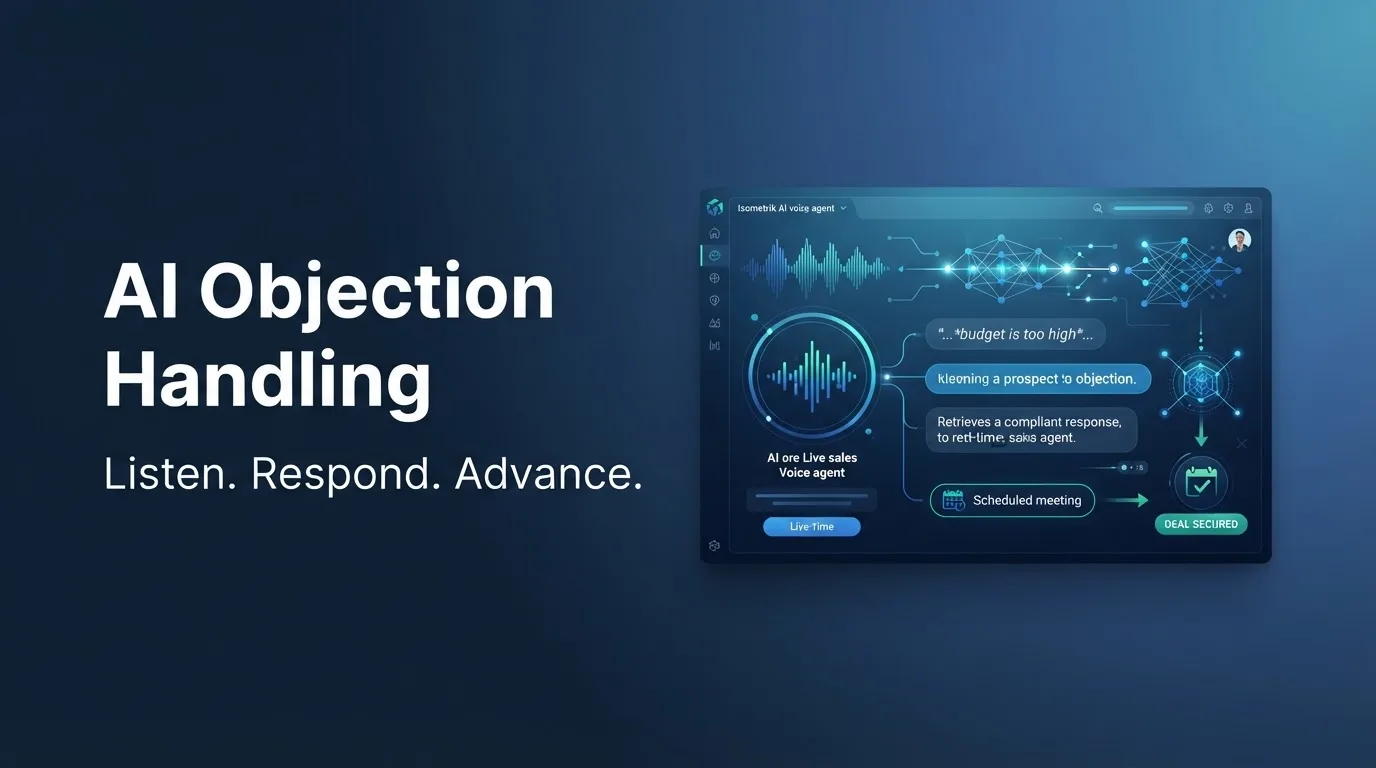
How AI Cold Calling Actually Works: From First Dial to Booked Meeting

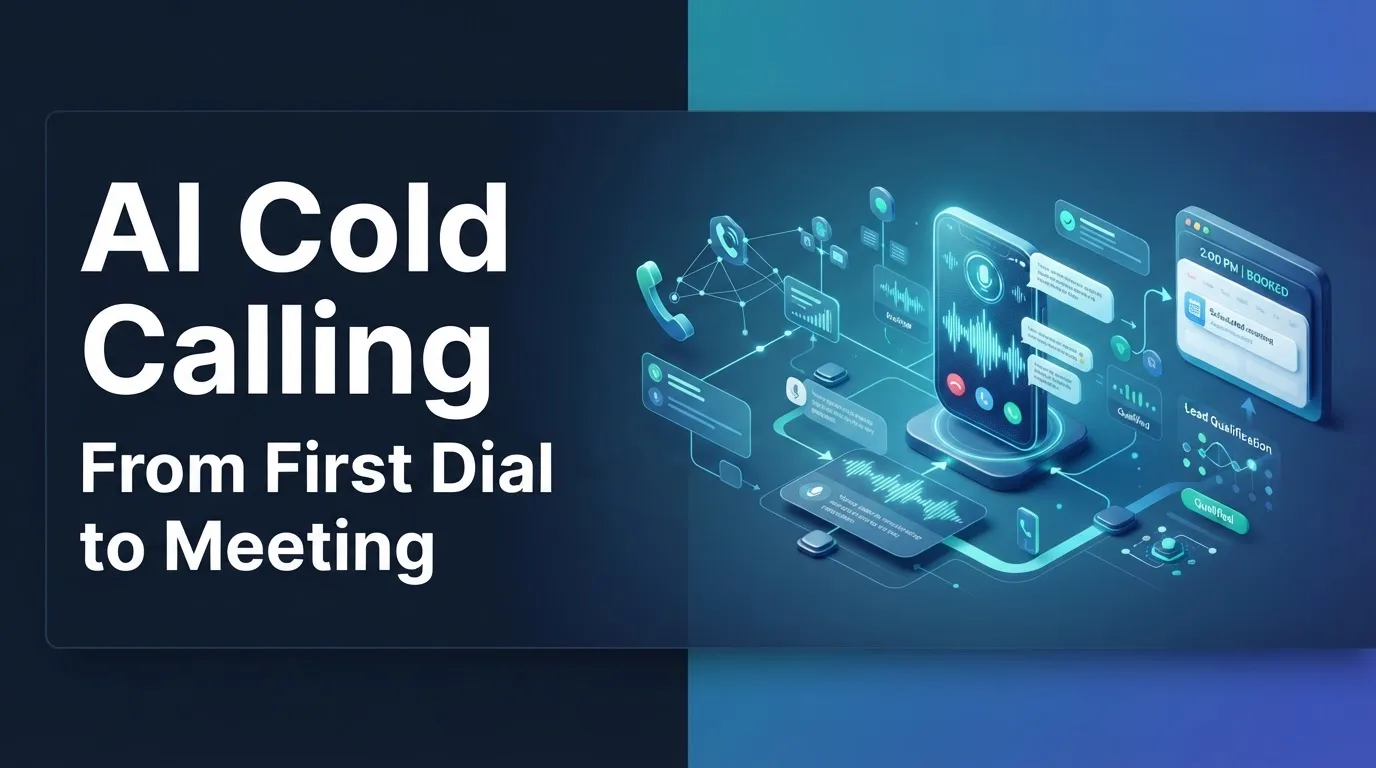
Picture a sales team that never tires and follows up on every lead. That is the promise of AI cold calling. It is also why founders keep asking how AI cold calling actually works.
In short, software dials a number, listens, replies in a synthetic voice, and logs the result. The details decide whether it books meetings or burns your phone number. This guide covers the technology, the rules, and a practical way to start.
What AI Cold Calling Is: Two Models
AI cold calling uses software to automate, assist, or analyze outbound sales calls. In one model, an AI voice agent for sales speaks to prospects directly. In the other, a human rep talks while AI handles dialing, notes, and coaching in the background.
Sources define the term differently. Some describe only the assisted model, where AI never places a call. Others describe agents that dial and talk on their own. Both exist, so confirm which one a vendor sells.
| Autonomous voice agent | Human-assisted calling | |
| Who talks | The AI voice | A human rep |
| What AI does | Dials, talks, qualifies, and books | Parallel dialing, live prompts, and notes |
| Best for | High-volume, simple qualification | Complex, multi-stakeholder deals |
| Biggest watch-out | Consent, disclosure, and trust | Rep time still caps volume |
Most teams land on a hybrid. AI handles volume and routine qualification, while people own discovery and negotiation. Our comparison of AI SDRs vs. human SDRs shows where each fits.
Three factors usually decide the model:
- Deal size: higher-value deals usually need a human voice.
- List quality: warm, opted-in lists suit autonomous agents.
- Risk: a human voice avoids the artificial-voice rules, but Do Not Call rules still apply.
AI outbound calling also fits teams without a large sales floor. A founder can test a small list in weeks. Hiring and training a caller team takes far longer.
How AI Cold Calling Actually Works, Step by Step
Every autonomous call runs through the same stages. Here is the sequence, with what to check at each stage.
| Stage | What happens | What to check |
| 1. List prep | The system pulls contact data and CRM history, then ranks leads by fit and intent for lead qualification. | Verified numbers and consent records |
| 2. Dialing | Software places the call. Answering machine detection separates a live person from voicemail. | Detection accuracy and voicemail rules |
| 3. Speech-to-text | The prospect’s words become text in real time. | Accuracy on accents and phone audio |
| 4. Reasoning | A large language model reads the text, tracks intent, and picks a reply within your script. | Script limits and objection rules |
| 5. Text-to-speech | The reply becomes natural-sounding audio. | Voice quality and pacing |
| 6. Action | The agent qualifies the lead, books a meeting, or runs a warm transfer to a person. | Handoff speed and shared context |
| 7. CRM logging | The call is transcribed, scored, and saved to your CRM. | Field mapping and audit trail |
Quality compounds across stages. A weak transcript produces a weak reply, and a weak reply sounds awkward when spoken. Fix the earliest weak link first.
Stages three to five repeat on every turn of the conversation. The loop runs in a fraction of a second, which is why speed matters. For the engineering view, read our guide on how to build an AI voice agent from scratch.
Human-assisted setups work differently. Parallel dialing rings several numbers at once and connects the rep only when someone answers. Conversational intelligence then flags objections and frustration while the rep talks. Afterward, the system handles CRM logging and coaching scores.
Two moments deserve extra attention. Prospects decide within seconds whether to stay, so the opening must state who is calling and why. Voicemail is the second. Most campaigns leave a short message or move on, based on your rules.
The warm transfer is the other make-or-break step. When a prospect wants a person, the agent should pass the call with a transcript and summary. The rep then starts mid-conversation instead of asking everything again.
Scoring and follow-up use the same data. Our walkthrough on how to build an AI SDR shows how scores feed the call queue. You can also automate SDR workflows so every call outcome triggers the next step.
Why Voice Latency Decides the Call
Callers judge a voice within seconds. In conversation, people start speaking roughly 200 milliseconds after the other person stops. A voice agent has more work to do in that gap. It must transcribe, interpret, and speak back.
Some speech models report responses under 100 milliseconds on their own. Complete systems are slower, and some vendors publish averages near 500 milliseconds. Shorter is better, but consistency matters too. A steady response feels more natural than a fast, uneven one.
Four things separate a human-sounding call from a robotic one:
- Voice latency: long pauses signal a machine.
- Interruptions: the agent must stop talking when the prospect cuts in.
- Details: phone numbers, dates, and company names must be read correctly.
- Number reputation: high-volume, short calls can get a number flagged as spam.
Your phone number also carries a reputation. Carriers watch call patterns, and unusual volume can hurt answer rates. Use numbers that match your brand, and keep calling volumes steady. Start small and watch how many dials reach a person.
Test with real recordings, not just transcripts. A clean transcript does not show whether the prospect stayed on the line.
Is AI Cold Calling Legal? Rules by Region
Yes, with conditions. In the US, the FCC ruled in 2024 that AI-generated voices count as artificial voices under the TCPA. Consumer calls therefore need prior consent, caller identification, and an opt-out. Telemarketing calls need prior express written consent.
A February 2026 Fifth Circuit decision held that the statute itself requires only prior express consent. The FCC rule still applies elsewhere, so written consent is the safer national standard.
The FTC’s Telemarketing Sales Rule adds Do Not Call and prerecorded-call rules for consumer sales. Most business-to-business calls are exempt. Still, a business contact whose number rings a personal cell phone can trigger TCPA consent rules.
Penalties are real. TCPA damages run $500 to $1,500 per call. The FTC lists civil penalties above $53,000 per Do Not Call violation.
Whatever your region, a few habits keep campaigns safe:
- Tell people at the start that they are speaking with AI.
- Name your company and give a callback number.
- Offer an opt-out during the call, and honor it fast.
- Scrub every list against Do Not Call registries.
- Call only inside permitted local hours, such as 8 a.m. to 9 p.m. in the US.
- Record consent with a date, source, and wording.
| Region | Core rule | Practical step |
| US | TCPA and FCC rules treat AI voices as artificial. Do Not Call applies to consumer sales. | Get written consent, identify the caller, honor opt-outs |
| EU | The EU AI Act transparency rules require telling people they are talking to AI. GDPR governs personal data. | Disclose AI at the start of the call |
| UK | PECR requires consent that specifically covers automated marketing calls. Live B2B calls need TPS and CTPS screening. | Screen lists and keep consent records |
| Australia | Telemarketing calls to numbers on the Do Not Call Register need consent. Calling hours are restricted. | Wash lists and respect hours |
| Singapore | Check the Do Not Call Registry before marketing voice calls to consumers. B2B calls are generally outside it. | Check numbers and keep consent evidence |
| India | TRAI rules require promotional calls to come from registered telemarketers on the 140 number series. Do Not Disturb preferences apply. | Use registered numbers and honor DND |
This is general information, not legal advice. Rules change often, so have counsel review your campaign before it dials at volume.
Where AI Cold Calling Fits by Industry
Each example below starts with someone who asked to hear from you. That is where AI sales calls work best and carry the least legal risk.
- E-commerce: Call merchants who requested a seller demo, or follow up with shoppers who opted in to calls.
- SaaS: Reach trial sign-ups within minutes, confirm the use case, and book a demo.
- Recruitment and HR: Re-engage past candidates who opted in, then schedule screening calls.
- Logistics: Qualify shipper inquiries by confirming lanes and volumes before a broker steps in.
- Healthcare: Contact clinics that requested product details. Patient calls need added consent and privacy review.
- Education: Follow up with prospective students who submitted an inquiry form.
- Legal: Return calls to people who requested a consultation, and route urgent matters to staff.
Outside these warm cases, expect more legal and reputation risk. Cold lists also convert poorly with any caller, human or AI. Start where interest already exists, then widen the list only after the numbers hold up. Pair each use case with a clear opt-out line.
Getting Started with AI Cold Calling Software from Isometrik
Isometrik’s AI cold calling software places outbound calls, handles objections, qualifies leads, and books meetings. It records and transcribes every call and syncs results to Salesforce, HubSpot, Pipedrive, or Zoho CRM. Isometrik also provisions phone numbers and carrier setup. It says teams can see results in 6 to 8 weeks.
Before you launch, ask any vendor these questions, Isometrik included:
- Does the opening line tell people they are speaking with AI?
- How does the system capture and store consent records?
- Is every list checked against Do Not Call registries?
- Can interested prospects reach a person through a warm transfer?
- Can you set calling hours by time zone?
- Can prospects opt out during the call?
Then roll out in small steps:
- Start with a warm, consented list.
- Write a short script with one clear ask.
- Set handoff rules for tough objections.
- Pilot on a small list and review recordings weekly.
- Expand only when meetings booked justify it.
Measure what matters from the first pilot. Track the share of dials that reach a person and the conversations that finish. Then track meetings booked and show-up rates, and compare each result with a human-run baseline. Listen to a sample of calls every week, because transcripts hide tone and pacing.
Now you know how AI cold calling actually works: a loop of listening, reasoning, and speaking, wrapped in consent rules. Start small, keep a person within reach, and track meetings booked. Book a demo with Isometrik to see AI cold calling run on your own list.