What Is Agentic AI in Simple Terms? A Practical Guide for Business Leaders

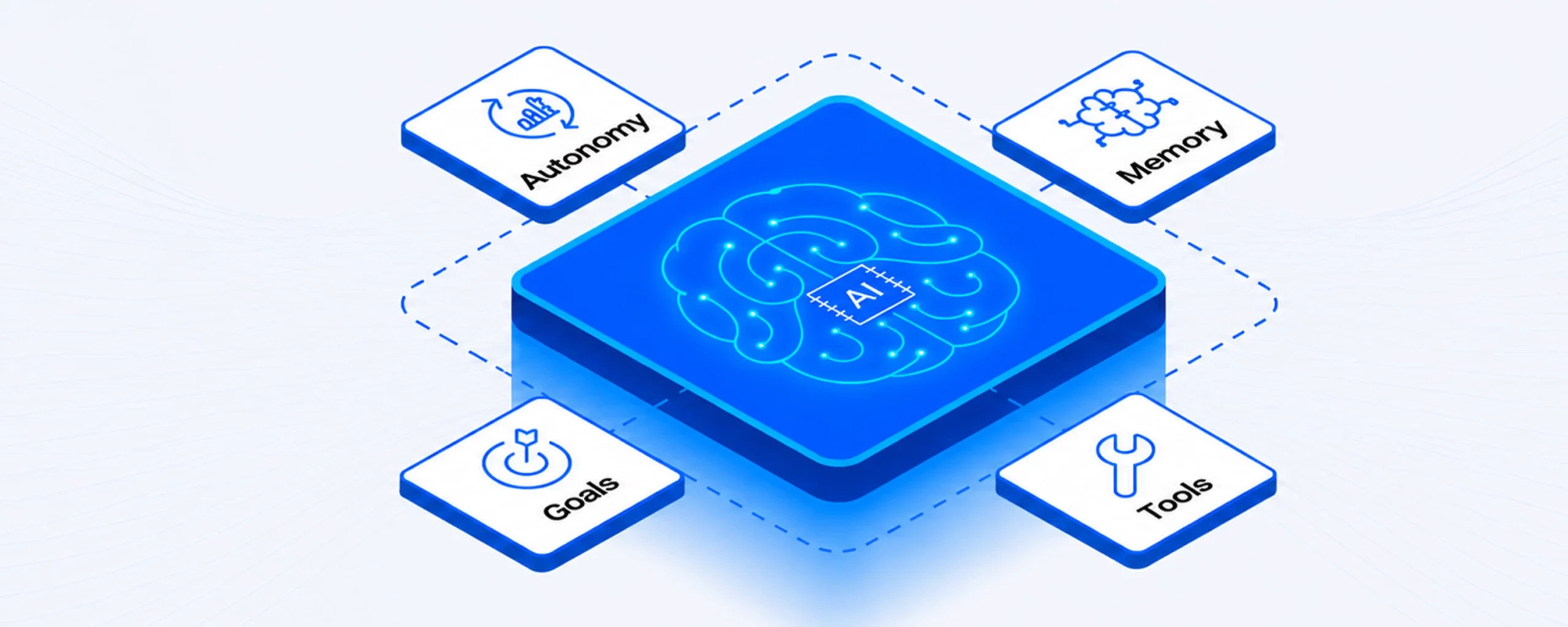
Agentic AI refers to intelligent systems that autonomously pursue goals, make decisions, and take actions like a human agent. Unlike basic chatbots, it plans, reasons, and adapts in real-time. In simple terms, it’s AI that “does” tasks independently, boosting efficiency in business workflows like sales outreach or customer support.
In this article we explain what is agentic AI in simple terms.
Understanding AI Basics Before Diving into Agentic AI
Many business leaders hear “AI” daily but struggle to separate hype from reality. At its core, AI includes tools like chatbots that answer questions or predictive analytics that forecast trends. These are reactive systems — they wait for input and provide outputs based on patterns.
Agentic AI builds on this foundation. It shifts from passive assistance to active problem-solving. Imagine a sales team overwhelmed by lead research. Traditional AI might summarize data, but agentic AI could research prospects, draft emails, and schedule follow-ups — all while aligning with your goals.
This evolution matters for mid-market companies with 50 to 5,000 employees. You’re likely using CRMs or workflow tools already. Agentic AI integrates seamlessly, turning those into proactive engines. The result? Less manual drudgery and more focus on high-value decisions.
To grasp what agentic AI means in simple terms, think of it as AI with agency: the ability to act independently toward an end. It’s not sci-fi; it’s deployable now for real ROI.
What Is Agentic AI In Simple Terms And What Makes It Different from Traditional AI?
Traditional AI excels at specific tasks, like image recognition or data sorting. It follows strict rules and needs constant human guidance. Agentic AI, however, operates with autonomy. It sets sub-goals, evaluates options, and adjusts based on feedback.
In simple terms, agentic AI behaves like a virtual employee. Instead of just responding to queries, it initiates actions. For instance, in recruitment, a traditional tool screens resumes. An agentic system might screen, rank candidates, reach out via email, and even schedule interviews if responses come in.
This difference stems from advanced capabilities like reasoning and planning. Agentic AI uses large language models (LLMs) combined with tools for execution, such as APIs to access calendars or databases.
| Aspect | Traditional AI | Agentic AI |
| Autonomy Level | Low — requires prompts for every action | High — pursues goals independently |
| Decision-Making | Rule-based, limited adaptability | Reasons through options, learns from outcomes |
| Use Case Example | Chatbot answering FAQs | AI agent automating full sales pipeline |
| Implementation Time | Weeks for setup | Days to weeks with pre-built platforms |
| ROI Focus | Efficiency in isolated tasks | End-to-end workflow transformation |
For operations heads in the USA, this means handling higher ticket volumes without extra hires. Agentic AI doesn’t just notify you of issues; it resolves them proactively.
How Agentic AI Works: A Step-by-Step Breakdown
Understanding agentic AI requires looking at its workflow. It starts with a clear goal, like “qualify 50 leads this week.” The AI then decomposes this into steps: research contacts, personalize outreach, track responses, and escalate hot leads.
First, perception: The AI gathers data from sources like your CRM or email logs. Next, reasoning: It analyzes information to decide the best path — perhaps prioritizing high-value industries. Then, action: It executes, such as sending tailored messages via integrated tools.
Feedback loops make it smarter. If an email bounces, the AI adjusts strategies. This cycle ensures reliability.
- Goal Setting: Define objectives in plain language, e.g., “Reduce hiring time by 30%.”
- Planning: AI creates a roadmap, breaking tasks into manageable parts.
- Execution: Integrates with tools like ATS systems for seamless operation.
- Monitoring: Tracks progress and adapts to changes, like market shifts.
- Learning: Improves over time with minimal human tweaks.
In banking or e-commerce, this means agentic AI can monitor transactions, flag anomalies, and even initiate fraud alerts — all in real-time.
Implementation timelines vary. For mid-market firms, custom setups take 4–8 weeks, with ROI visible in the first quarter through metrics like cost per lead dropping 20–40%.
Real-World Business Examples of Agentic AI in Action
Agentic AI shines in practical scenarios. Take sales: A head of growth at a SaaS company sets a goal to nurture leads. The AI agent scans LinkedIn, crafts personalized pitches, and follows up across channels. Results? Reply rates up 25%, pipeline velocity increased.
In recruitment, talent ops leaders face screening bottlenecks. An agentic system reviews applications, scores fits against job criteria, and engages candidates via chat. One logistics firm cut time-to-hire from 45 to 20 days, saving thousands in recruiter hours.
For customer experience, ops teams deal with support overload. Agentic AI triages tickets, resolves simple issues (like password resets), and escalates complex ones with context. A healthcare provider handled 30% more queries without added staff.
| Industry | Agentic AI Application | Expected Outcome |
| Sales (SaaS) | Lead qualification and outreach | 20–50% faster pipeline movement |
| Recruitment (Mid-market) | Candidate sourcing and scheduling | 30–50% reduction in hiring cycles |
| Operations (E-Commerce) | Order processing and issue resolution | 15–35% drop in support costs |
| Legal | Document review and compliance checks | 40% less manual review time |
These examples show agentic AI’s versatility. For US-based enterprises with $10M+ revenue, it’s a way to scale without proportional headcount growth.
Key Benefits and ROI of Implementing Agentic AI
Why invest in agentic AI? It directly tackles pain points like manual work and slow processes. Benefits include scalability — handle growth without hiring — and precision, as AI adapts to your unique workflows.
ROI is tangible. Conservative benchmarks: Sales teams see 15–30% revenue uplift from automated outreach. Recruitment yields 20–40% faster fills, cutting costs by $5K–$15K per role. Operations reduce response times by 50%, lowering overhead.
Build vs. buy? Building from scratch costs $100K+ and takes 6+ months, with high failure risk. Buying via platforms speeds deployment to weeks, at $5K–$50K initial, with ongoing fees under 10% of savings.
- Cost Savings: Automate routine tasks, freeing staff for strategy (ROI in 3–6 months).
- Efficiency Gains: 24/7 operation without fatigue, ideal for global teams.
- Scalability: Handles volume spikes, like holiday e-commerce rushes.
- Compliance Edge: Built-in safeguards for data privacy in regulated sectors like banking.
For CTOs eyeing digital transformation, agentic AI offers ownership — no vendor lock-in with custom integrations.
Challenges in Agentic AI and Practical Solutions
No technology is perfect. Challenges include reliability — AI might misinterpret goals — and integration hurdles with legacy systems. Security risks, like data exposure, also loom.
Solutions start with clear guardrails. Define goals precisely and include human-in-the-loop for oversight. For integration, choose platforms compatible with ERPs or CRMs.
Ethical concerns? Agentic AI can amplify biases if trained poorly. Mitigate with diverse datasets and regular audits.
| Challenge | Impact | Solution | Timeline to Resolve |
| Reliability Issues | Erroneous actions | Iterative testing and feedback | 1–2 weeks post-deploy |
| Integration Complexity | Workflow disruptions | API-first platforms | 2–4 weeks setup |
| Security Risks | Data breaches | Encryption and compliance tools | Ongoing; initial audit 1 week |
| High Initial Costs | Budget strain | Phased rollout | ROI offsets in 3 months |
Agentic AI’s biggest hurdle? Adoption inertia. Overcome it by piloting small — start with one department for quick wins.
Getting Started: Steps to Deploy Agentic AI in Your Business
Ready to explore agentic AI? Begin by auditing workflows. Identify repetitive tasks in sales, hiring, or ops where autonomy adds value.
Next, assess tech maturity. If you’re using ATS or CRM tools, you’re primed. Partner with experts for custom builds that integrate smoothly.
Deployment: Set goals, train the AI on your data, and launch a pilot. Monitor KPIs like task completion rates.
Key takeaways:
- Budget $10K–$100K for mid-market pilots, scaling based on results.
- Expect 4–12 week timelines for production-ready systems.
- Measure success via ROI metrics: time saved, costs cut, output boosted.
In summary, agentic AI is the next step in AI evolution — autonomous agents that drive business outcomes. For US leaders facing growth pressures, it offers fast, controllable automation.
Platforms like Isometrik AI help organizations deploy production-ready agentic AI systems that integrate with CRMs and workflows, delivering measurable outcomes without extended development timelines. Explore how tailored agents can address your specific automation needs today.