What Is White Label and How Does It Work? A Founder’s Guide

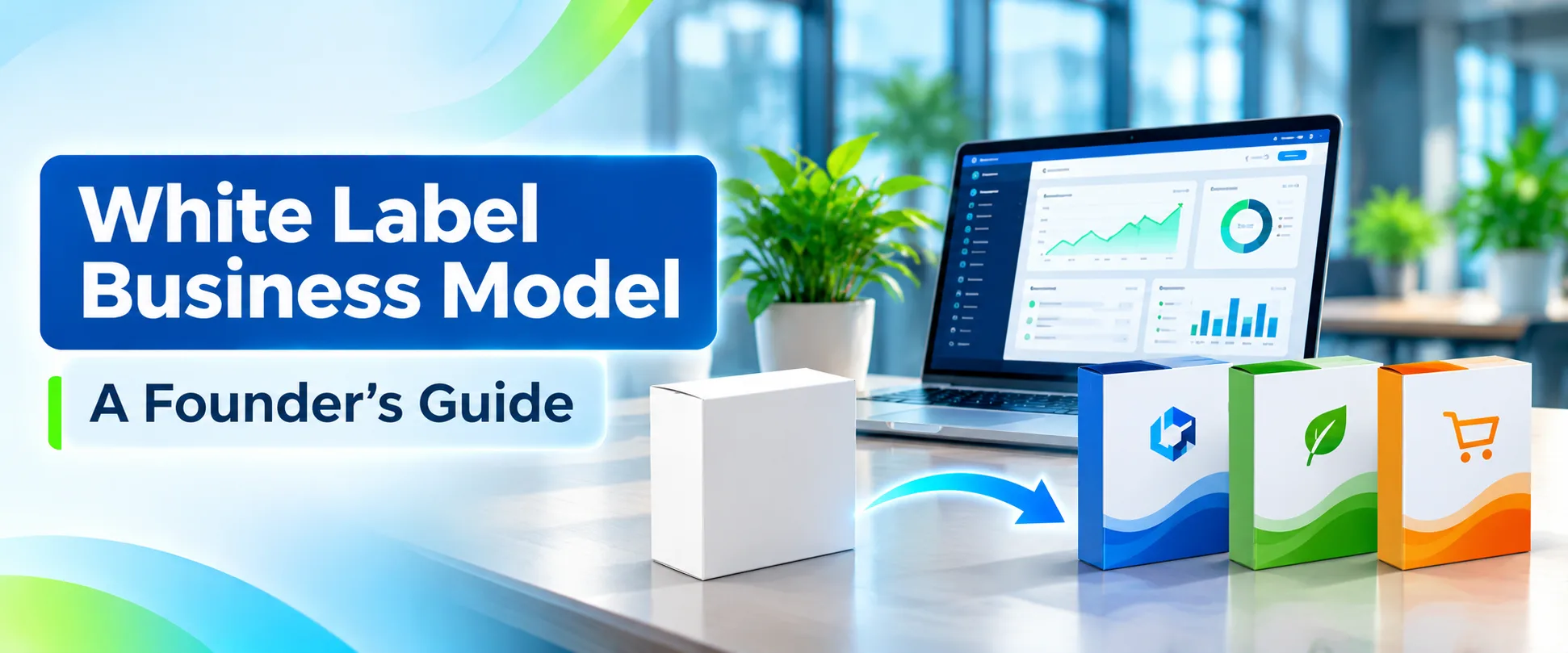
You’ve probably bought a white label product this week without knowing it. That store-brand cereal or your agency’s client dashboard may come from a company you’ve never heard of. So, what is white label and how does it work? In short, one company builds a product, and another sells it under its own brand.
This guide breaks down the model in plain English. You’ll see how the process works and how it differs from private label. You’ll also see where it fits in software and AI, plus the risks to weigh first.
What Is White Label? Meaning and Origin
A white label product is made by one company and rebranded by another. The reseller adds its own name, logo, and packaging. To the buyer, it looks like the reseller made it. The original maker usually stays out of sight.
The term is widely traced to the music business. Labels sent promo records to DJs in plain white sleeves before the official artwork was ready. Today, Investopedia’s definition of a white label product captures the same idea: one maker, many brands.
Store brands show the idea in action. Walmart’s Great Value and Costco’s Kirkland Signature sit right next to national names. Many of these items come from outside manufacturers, though most are technically private label. Shoppers often pay less because they skip the big-brand marketing markup.
Every white label deal has three key players:
- The producer builds a generic, ready-to-sell product.
- The reseller brands, prices, and sells it.
- The end customer buys from the reseller and sees only its brand.
Why does this matter now? Launch costs have dropped, and buyers care more about brand trust than who built the product. That shift makes white labeling a practical first step for many founders.
What Is White Label and How Does It Work, Step by Step
Understanding what is white label and how does it work starts with the deal flow. The mechanics are simple, but the details decide whether the deal pays off. Most arrangements follow four stages.
- Creation: A manufacturer or developer builds a generic product, like a serum, website builder, or chatbot.
- Rebranding: The reseller licenses or buys it, then adds its logo, colors, domain, and packaging.
- Sale: The reseller markets and prices the product as its own offering.
- Fulfillment and support: The producer often handles shipping or servers, while the reseller owns the customer relationship.
Pricing usually works one of two ways. Physical goods are bought at wholesale and marked up. Software is typically licensed per seat, per client account, or by usage. The reseller keeps the gap between its cost and its retail price.
Table 1: Who Does What in a White Label Deal
| Responsibility | Producer | Reseller |
| Product development and R&D | Owns it | Not involved |
| Branding and packaging | Supplies a blank or customizable product | Applies logo, colors, and design |
| Marketing and sales | Rarely involved | Owns it fully |
| Pricing | Sets wholesale or license fee | Sets retail price |
| Fulfillment or hosting | Often handles it | Sometimes handles it |
| Customer support | Backend and technical issues | Front-line customer contact |
| Product updates | Owns the roadmap | Requests features |
Get this split in writing before you sign. A clear service level agreement (SLA) prevents finger-pointing when something breaks.
A simple way to get started:
- Pick a niche where you already have an audience or expertise.
- Shortlist three to five suppliers and order samples or demos.
- Compare unit costs, minimum orders, and support terms.
- Launch a small test batch or pilot client before scaling.
White Label vs. Private Label vs. OEM
These terms get mixed up, even by seasoned operators. The difference comes down to exclusivity and customization. Here’s the quick version.
- White label: One generic product sold to many resellers, each using its own brand.
- Private label: A product made exclusively for one retailer, often to its own specs.
- OEM (original equipment manufacturer): A maker builds products or parts that another company sells or integrates under its name.
Table 2: White Label vs. Private Label vs. OEM
| Factor | White Label | Private Label | OEM |
| Exclusivity | Shared with other resellers | Exclusive to one brand | Varies by contract |
| Customization | Branding and light tweaks | Formula, design, and specs | Built to buyer’s specs |
| Upfront cost | Low | Medium to high | High |
| Time to market | Days to weeks | Months | Months or longer |
| Minimum order | Often low or none | Usually higher | Usually high |
| Best for | Testing an idea fast | Building a distinct product | Scaling an established line |
Many brands start with white label, prove demand, then move to private label. That path lets you confirm product-market fit before you sink money into custom R&D.
Software follows the same logic. A white label SaaS tool is shared across resellers, while a custom build belongs to you alone. Some vendors offer a middle path, letting you start white label and later take ownership of the code.
White Label Examples Across Industries
White labeling started on grocery shelves, but it now runs through almost every sector. Software and services are where it’s growing fastest. Here’s how it shows up across key industries.
Table 3: Common White Label Products by Industry
| Industry | Common White Label Product | Typical Reseller |
| E-commerce and retail | Skincare, supplements, coffee, apparel | DTC brands, creators, influencers |
| SaaS | Website builders, email tools, analytics dashboards | Marketing agencies, consultants |
| Fintech | Payment processing, branded debit cards | Banks, apps, marketplaces |
| Healthcare | Telehealth platforms, patient chat tools | Clinics, health networks |
| Education | Learning management systems, AI tutors | Schools, edtech startups |
| Recruitment and HR | Applicant tracking, AI screening agents | Staffing firms, HR consultancies |
| Legal | Client intake bots, document assistants | Law firms, legal tech startups |
Print-on-demand platforms like Printify now list white label skincare and coffee. Creators can test physical products without buying bulk inventory. In SaaS, agencies resell rebranded reporting tools under their own names.
The same pattern is spreading globally. Banks and super apps across the U.S., UK, and APAC embed white label payments and chat features. In AI, agencies now launch branded voice and chat agents for local businesses. A white label AI chat platform is one of the most popular entry points.
Fitness and wellness offer a clear example. Many supplement brands buy proven formulas from contract manufacturers and focus on community and content. The winners usually stand out through marketing, not chemistry.
Content creators use the same playbook. A skincare influencer can launch a branded serum to test demand. If it sells, they can invest in a custom formula later. If it flops, the loss stays small.
Benefits and Risks of White Labeling
White labeling can get you to market in weeks. But it isn’t free money. Weigh both sides before you commit.
The main benefits:
- Faster launch: Skip months or years of R&D and setup.
- Lower upfront cost: No factory, tooling, or engineering team needed.
- Proven product: Many white label goods are already tested in the market.
- Sharper focus: Spend your time on branding, marketing, and customers.
- Easy expansion: Add new product lines without new hires.
The main risks:
- Weak differentiation: Competitors may sell the identical product.
- Margin pressure: Wholesale or license fees cap your profit.
- Vendor lock-in: Switching suppliers can mean rebuilding from scratch.
- Quality control: The producer’s mistakes carry your name.
- Compliance exposure: The brand on the label shares the legal risk.
That last point matters most in regulated categories. The FDA does not approve dietary supplements before they reach shelves. Companies selling them are responsible for safety and honest labeling. Salesforce’s guide to white label benefits covers more tradeoffs for small businesses.
You can reduce most of these risks with a few habits. Vet suppliers carefully and test samples yourself. Add your own value through service, bundles, or content. Keep a backup supplier in mind so one partner never holds all the cards.
White Label AI: Where the Model Is Heading
Software has always suited white labeling, and AI may be the best fit yet. Production-grade AI agents need specialized talent, clean data pipelines, and months of testing. Most agencies and SaaS teams would rather resell or embed a proven platform.
That’s why the white label AI platform model is taking off. Agencies sell branded AI receptionists and sales agents to local businesses. SaaS founders bolt AI onto existing products. If you’re starting from zero, here’s how to launch an AI agency the lean way.
The core logic hasn’t changed. A specialist builds the engine, and you bring the brand, niche knowledge, and client relationships. In AI, that split lets small teams compete with much larger players.
What to check in a white label AI provider:
- Full rebranding: Your logo, domain, and interface, with no vendor watermark.
- Security: SOC 2 compliance for B2B and enterprise deals.
- Health data rules: HIPAA readiness if you act as a HIPAA business associate.
- Data ownership: Client data should never train public models.
- Code and IP: Options to own the code or migrate later.
- Integrations: CRM, calendar, phone system, and API support.
- Deployment help: Hands-on support for deploying AI agents in production.
Isometrik’s AI Agent Builder fits this model well. You can design, train, and deploy custom AI agents, then white-label them for clients. It’s SOC 2, HIPAA, and GDPR compliant, which suits healthcare, legal, and recruitment work.
Picture a staffing agency that wants an AI screening assistant under its own name. Or a clinic network that needs a branded patient intake agent. In both cases, the provider handles the AI stack while the brand owns the client experience.
Want to sell a full branded AI SaaS instead? Isometrik’s AI Product Accelerator includes multi-tenant architecture and full source code. It’s built to help teams launch their own AI product in weeks, not quarters.
Conclusion
So, what is white label and how does it work? One company builds the product, and another brands and sells it. The producer handles the hard engineering or manufacturing. The reseller owns the brand, the price, and the customer.
Used well, white labeling helps you test demand fast and keep upfront costs low. Used carelessly, it leaves you selling a commodity with thin margins. Pick a partner you trust, put responsibilities in writing, and add value beyond the logo.
Ready to launch a branded AI product without a year-long build? Book a free strategy call with Isometrik to map out your options.