Pre-Built AI Infrastructure for Startups: Ship Faster Without a Platform Team

Most founders don’t need to run their own GPU cluster. They need a working AI product, and they need it before the runway shrinks.
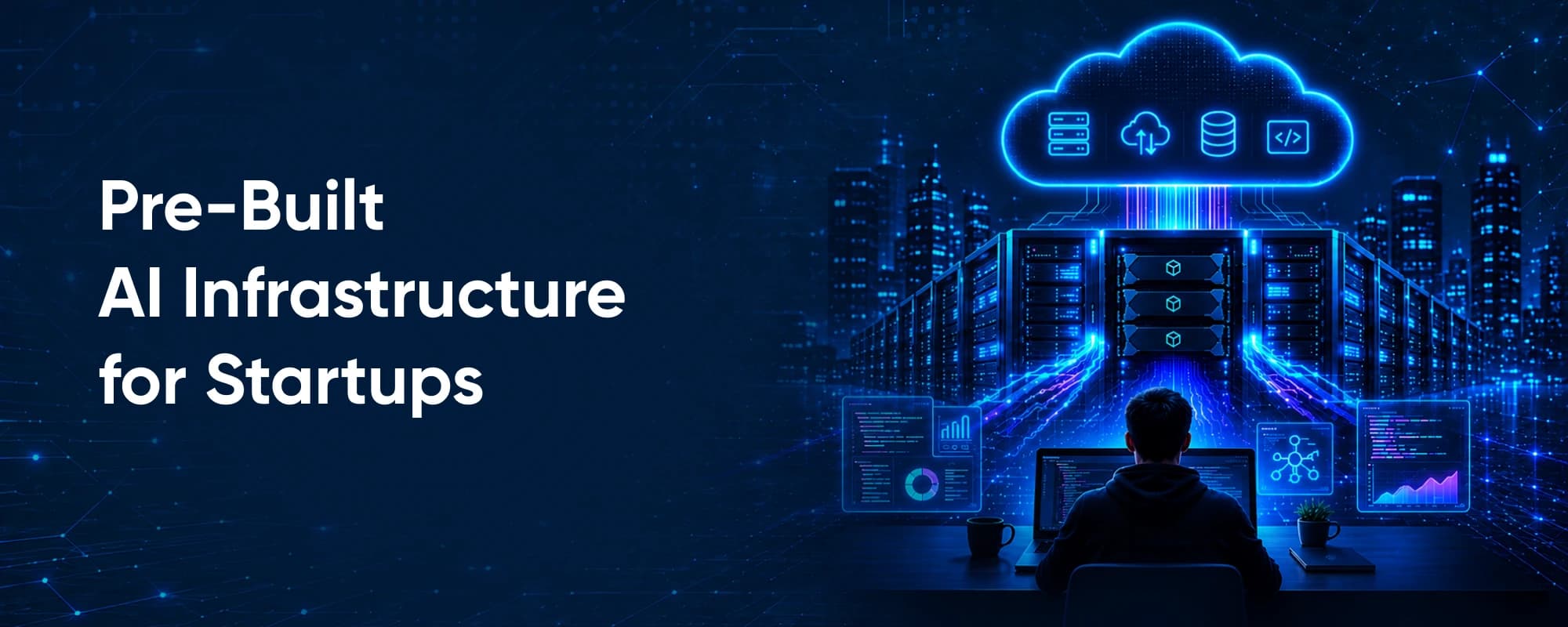
Pre-built AI infrastructure for startups means renting the heavy parts of the AI stack instead of building them. That includes model access, data retrieval, orchestration, and monitoring. You pay for usage, and someone else handles the servers.
This blog covers what the stack includes, when buying beats building, and how to compare providers. It also covers startup credits, common mistakes, and sector examples. By the end, you’ll know which layers to rent and which to own.
What Pre-Built AI Infrastructure for Startups Includes
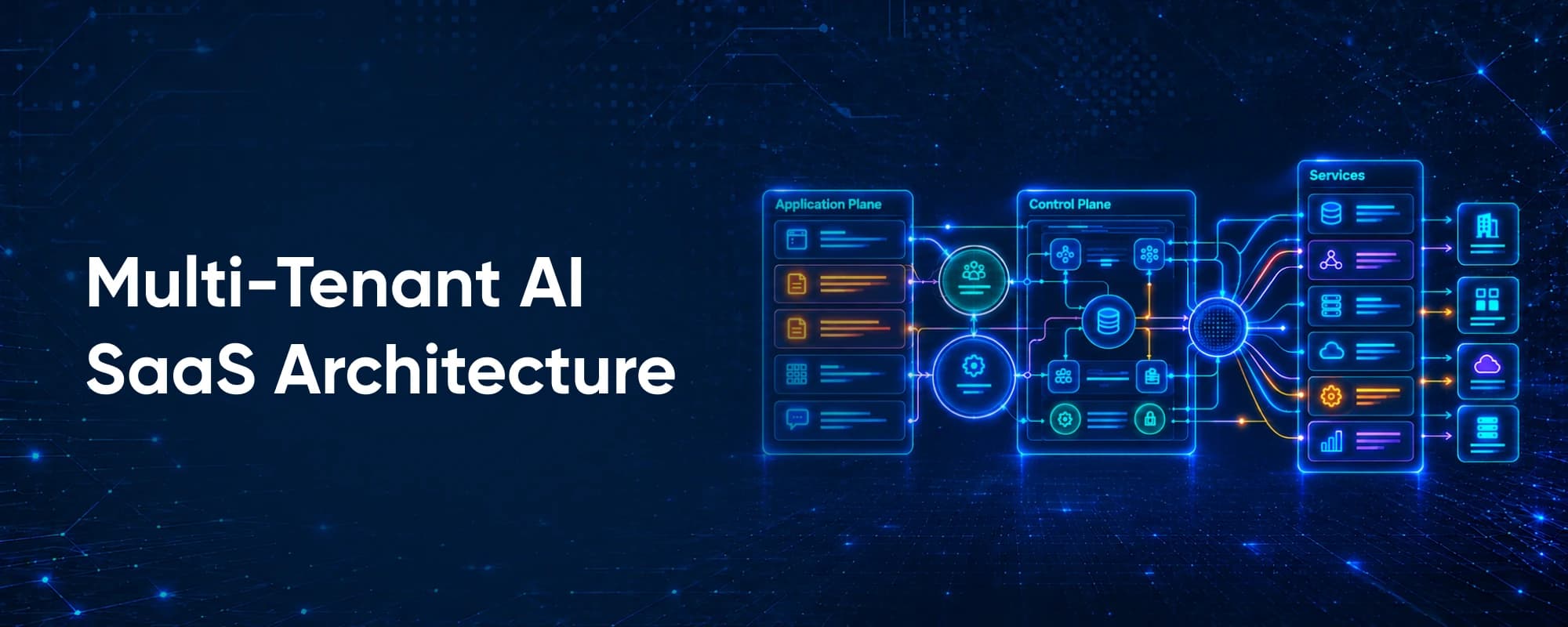
A modern AI product sits on four layers. Each one now has mature, managed options. Buying them means your engineers work on the product instead of the plumbing. Here is how the stack breaks down.
| Layer | What it does | Example tools |
| Model access | Supplies the language, vision, or speech models | Managed APIs from Anthropic, OpenAI, and Google |
| Data and retrieval | Stores and searches your own data for accurate answers | Vector databases and RAG pipelines |
| Orchestration and agents | Manages memory, tool use, and multistep tasks | Frameworks like LangChain, or an agent studio |
| Evaluation and observability | Tracks quality, drift, latency, and cost | Logging, tracing, and testing tools |
Think of the stack as a set of services you plug together. You don’t train a foundation model or rack a single server. You write the logic that connects the pieces to your customers’ problems. Most of it arrives as an API key and a dashboard.
Here is what each layer saves you:
- Model access: No training runs, no GPU purchases, and no research hires. You call an API and pay per use.
- Data and retrieval: Your own documents and records become searchable. A retrieval-augmented generation (RAG) pipeline grounds answers in that data.
- Orchestration and agents: Agents can remember context and call tools. Safe execution matters here, as our guide to an AI agent with code execution explains.
- Evaluation and observability: You catch drift, slow responses, and bad answers before customers do.
One venture firm calls evaluation and observability among the most underfunded layers of the stack. Many startups skip them until something breaks. Add them early, because they are cheap insurance. That small habit spares you from hearing about quality problems on social media.
Build vs. Buy: When Pre-Built Wins
Building infrastructure feels safer because you control everything. In practice, it slows early teams down. Every custom component needs engineers to build, secure, and maintain it. Our deeper build vs buy AI platform guide covers the full decision.
| Factor | Build in-house | Buy pre-built |
| Time to launch | Often months | Often weeks |
| Upfront cost | High (hardware and specialist hires) | Low (usage-based pricing) |
| Team required | ML and DevOps specialists | Product engineers |
| Control | Full | Shared with the vendor |
| Best for | Companies whose model is the product | Companies that use AI inside the product |
The hidden cost of building is people, not hardware. A self-run stack needs engineers who understand GPU scheduling, model serving, and monitoring. Those hires are scarce and expensive. Pre-built AI infrastructure for startups lets a small product team ship without them.
Buy pre-built when these conditions describe your startup:
- AI is a feature of your product, not the product itself.
- Your edge comes from design and data, not model training.
- You have no dedicated ML or DevOps hires yet.
- You need a prototype in front of customers this quarter.
- Your usage is still hard to predict.
Build only the layer that makes you different. For many startups, that is proprietary data or a fine-tuned model. Rent everything else. You can always bring a layer in-house once volume justifies the cost.
Hybrid setups are common and sensible. A team might use a managed API for general tasks and host a smaller open model for one high-volume workflow. Start simple, review costs monthly, and move a layer only when the numbers support it.
Choosing Between APIs, GPU Clouds, and Platforms
Pre-built AI infrastructure for startups comes in three forms. Managed APIs are the usual starting point. You get strong models with no setup, and you can switch providers as better options appear. The tradeoff is per-token pricing, which grows with traffic.
| Provider type | Best for | Watch out for |
| Managed model APIs | Fast prototypes and most early products | Per-token costs at scale and vendor lock-in |
| GPU clouds | Fine-tuning or hosting open models | Needing in-house infrastructure skills |
| Full AI platforms | Launching a branded AI product quickly | Code ownership and export options |
GPU clouds rent you the hardware. Nebius for Startups, for example, offers non-virtualized NVIDIA GPUs and supports tools like Kubernetes, Slurm, and Ray. That gives you more control, but also more to manage.
Running your own serving stack means handling GPU scheduling, autoscaling, and cold starts. A scale-to-zero setup can take several minutes to restart. It has to provision a GPU node, pull a container image, and load model weights. Real-time chat products rarely tolerate that delay.
Open-source models offer another route. Hosted inference services run them for you, so you skip the server work. Nebius Token Factory is one example. Quality varies by task, so test before you commit.
Full AI platforms sit one level higher. They bundle models, agents, data handling, and user management into one product. This route suits founders who want to launch a branded product fast. Confirm that you can own the code and move your data.
Ask every vendor these questions before you sign:
- Where does my data live, and who can see it?
- Can I export my data and code if I leave?
- What happens to pricing at ten times today’s volume?
- Is a self-hosted option available? Our guide to choosing a self-hosted AI agent platform explains why that matters.
- Which security and compliance reports can you share?
Stretching Your Runway With Startup Credits
Cloud credits can cover months of infrastructure spending. Eligibility rules vary, so read the fine print. The figures below are current as of October 2026.
- NVIDIA: The NVIDIA Inception program is free, takes no equity, and accepts startups at any funding stage. Members can request partner cloud credits, training, and preferred hardware pricing.
- Google: The Google for Startups AI program offers up to $350,000 over two years for AI-first startups. You need VC funding, a company under five years old, and Gemini at the core of your product. Credits don’t cover third-party models.
- AWS: AWS Activate starts with $1,000 in its Founders tier. Provider-backed startups can reach up to $200,000, and AI startups can qualify for more. Credits can also cover third-party models on Amazon Bedrock.
- Nebius: Credits flow through VC partners to startups that have raised $5 million or more. Smaller teams can still join its founder community.
Start with the program that matches your cloud. If you already build on AWS, apply to Activate first. If your product runs on Gemini, start with Google. NVIDIA Inception pairs well with either, because it costs nothing and takes no equity.
Credits come with trade-offs. Most are tied to one cloud, so your first architecture choices can lock you in. Pick services you could realistically move later. Keep a simple sheet of credit balances, expiration dates, and monthly spend.
Apply to the programs you qualify for, and track every expiration date. Credits are a bridge, not a business model. Plan your costs for the day they run out.
Where the Pre-Built Approach Pays Off by Sector
The same stack serves very different businesses. What changes is the data you connect and the rules you follow. These examples show the pattern:
- E-commerce: Product search and support agents that read your catalog through retrieval.
- Logistics: Agents that answer shipment status questions and handle delivery exceptions.
- Healthcare: Patient intake and follow-up, where audit logs and privacy controls matter.
- Legal: Document review and research assistants grounded in firm or client data.
- Recruitment: Screening and scheduling assistants that expand recruiter capacity.
- Education: Tutoring and admin helpers that answer from course material.
- SaaS: In-app copilots that act on each customer’s own data.
Notice the pattern. None of these examples require a custom model. They need good retrieval, reliable agents, and solid monitoring. That is exactly what pre-built AI infrastructure for startups provides.
Regulated sectors add one more requirement: proof of security. Buyers in healthcare, finance, and legal often ask for a SOC 2 report before signing. Our overview of a SOC 2 compliant AI agent platform explains what to look for.
Common Mistakes to Avoid
Most of these mistakes share a root cause. Teams optimize for the demo instead of month twelve. A prototype that wows investors can still collapse under real traffic. Watch for these patterns:
- Buying GPUs too early. Rent capacity until real usage proves the need.
- Skipping evaluation. Without tests, quality problems reach customers first.
- Using the priciest model for everything. Route routine work to cheaper models, and save top-tier models for high-value tasks.
- Ignoring lock-in. Keep your prompts, data, and code portable.
- Forgetting post-credit costs. Model your monthly bill without any discounts.
- Treating security as a later task. Add access controls and audit logs from the start.
Fixing these early costs little. Fixing them after launch costs customers. A short monthly review of spend, quality scores, and vendor terms catches most problems.
Getting Started With Isometrik AI
If you want infrastructure without the build, Isometrik AI offers the AI Product Accelerator. It helps you launch your own AI SaaS product in 8 to 12 weeks. You get a working platform instead of a blank repository.
Here is what the Accelerator includes:
- Multi-tenant architecture
- Identity and access management with role-based controls
- Voice AI infrastructure
- An agent studio for building custom agents
- Audit logs for SOC 2 and HIPAA needs
- Full source code
You can also choose how it runs. Isometrik can manage the infrastructure, including scaling, updates, and monitoring, for predictable monthly pricing. Or you can own the code and host it yourself. A hybrid option exists too.
This route fits founders with a clear product idea but no appetite for a long platform build. It also suits teams that want a white-label product to resell. The strategy call is free, so it’s a low-risk way to test the fit.
Pre-built AI infrastructure for startups comes down to focus. Rent the proven layers, own what makes you different, and measure everything. Use credits to move faster, but plan for the bill after they end. Book a free strategy call to map your stack.